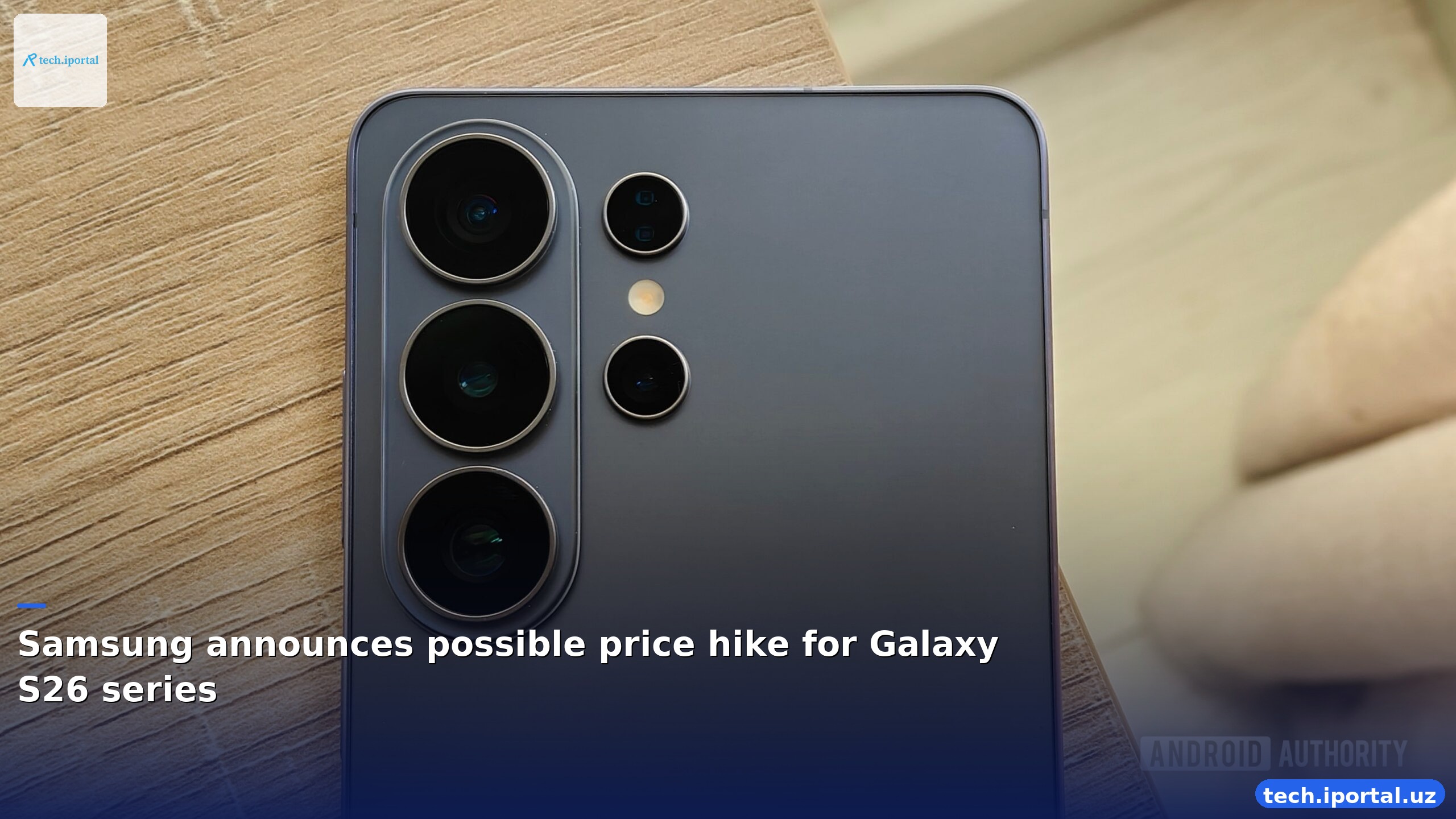
Samsung Electronics, the world leader in Android smartphones, is reportedly preparing an unusual price adjustment for its flagship Galaxy S26 series in South Korea. According to a leak from a Korean carrier, wholesale prices could increase by 149,600 won (roughly $110) starting 1 October, more than six months after the devices debuted.
Launch background and market timing
The Galaxy S26 lineup hit the market in March, positioning itself against Apple’s iPhone 18 series and a wave of high‑end Android competitors. At launch, Samsung emphasized upgraded camera optics, a new Snapdragon processor, and expanded memory options ranging from 12 GB to 16 GB of RAM. Initial pricing was aligned with the premium segment, aiming to retain market share in a region where Samsung traditionally dominates.
Details of the proposed price increase
The reported adjustment originates from a statement by a South Korean carrier that informed retailers of a uniform wholesale rise of 149,600 won across all S26 variants. The carrier’s notice, cited by Hans Economy, indicates that the increase would be applied on 1 October, well after the devices entered the market.
- Scope: All models – from the base S26 to the S26 Ultra – are affected.
- Amount: 149,600 won per unit, equivalent to about $110 at current exchange rates.
- Timing: Effective October 1, roughly seven months post‑launch.
Samsung has not confirmed the move publicly. In a brief comment, the company said it is reviewing pricing strategies but has not reached a final decision, and there is no indication of a similar adjustment in the United States.
Economic and technical drivers
Several macro‑level factors are likely influencing Samsung’s consideration. The global semiconductor shortage, which began in 2020, has persisted, pushing up the cost of key components such as DRAM and NAND flash memory. Recent reports show RAM prices climbing by double‑digit percentages, a trend that directly impacts the bill of materials for memory‑heavy flagships like the S26 series.
In addition to memory, advanced camera modules, high‑resolution displays, and the latest Snapdragon chipset have all experienced price pressure due to supply chain constraints and rising raw material costs. Samsung’s own statements in quarterly earnings calls have highlighted “inflationary pressures on component costs” as a challenge for maintaining profit margins.
Comparison with Apple’s pricing approach
Apple’s recent launch of the iPhone 18 Pro and iPhone 18 Pro Max, covered by Android Authority, featured higher launch prices compared to the previous generation. Moreover, Apple surprised the market by raising prices of older iPhone models shortly after the new release, as detailed in this report. Samsung’s contemplated post‑launch hike mirrors that strategy, suggesting a broader industry shift where manufacturers use new product cycles to recalibrate pricing across their portfolios.
Potential impact on consumers and retailers
For South Korean consumers, the price hike could translate into higher retail prices, especially for those purchasing devices after the October date. Retailers who have already stocked inventory at the original wholesale price may face margin compression unless they can pass the increase to end‑users.
From a market dynamics perspective, the move may affect Samsung’s competitive positioning against rivals such as Google’s Pixel series and emerging Chinese flagships, which have been aggressive on pricing to capture market share. A higher price point could also influence consumer decisions to upgrade from the S26 to the upcoming S27 series, potentially accelerating the adoption cycle.
Open questions and constraints
Several uncertainties remain:
- Will Samsung implement the increase uniformly across all carrier channels, or will there be regional variations?
- How will the price adjustment affect Samsung’s inventory turnover and promotional strategies for the S26 series?
- Is the hike a short‑term response to component cost spikes, or does it signal a longer‑term shift toward higher premium pricing?
Analysts will be watching Samsung’s official statements and any subsequent price changes in other markets to gauge the broader implications.
Conclusion
Samsung’s potential post‑launch price increase for the Galaxy S26 series underscores the mounting pressure from rising component costs and a competitive pricing landscape. While the adjustment is modest in absolute terms, its timing – seven months after launch – is atypical and may set a precedent for future flagship cycles. Consumers, retailers, and industry observers should monitor Samsung’s final decision, as it will provide insight into how major smartphone makers balance cost pressures with market expectations.