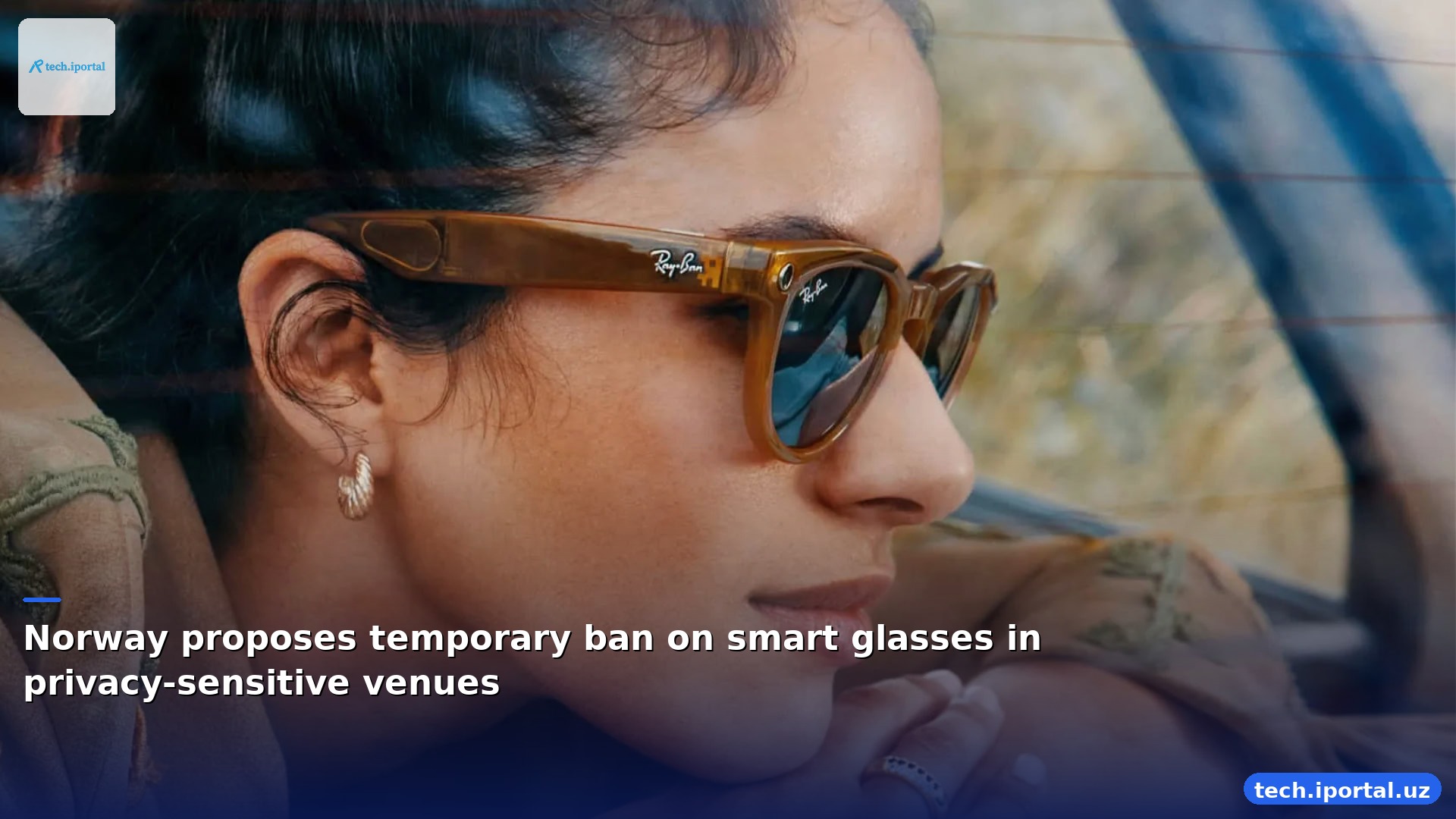
Smart glasses have moved from futuristic concept to a rapidly emerging consumer product. Major manufacturers such as Samsung, Meta and Google are racing to launch devices that combine augmented reality displays with everyday eyewear. As the technology approaches mass adoption, governments are confronting a new set of privacy challenges that traditional cameras and smartphones did not fully anticipate.
Why Norway is moving fast
The Norwegian Ministry of Justice and Public Security announced a draft proposal that would temporarily ban the use of smart glasses in locations where "privacy is particularly important." The list includes schools, hospitals, fitness centres with showers, kindergartens, playgrounds, youth clubs, museums, parks, beaches and shopping malls. The proposal is being fast‑tracked to parliament with the aim of giving regulators time to decide which categories of devices should be covered and whether a permanent legal framework is required.
Technical backdrop of smart glasses
Modern smart glasses typically integrate a miniature display, a camera, microphones, sensors for motion and eye tracking, and a wireless connection to a smartphone or cloud service. Battery life ranges from a few hours to an entire day, depending on usage patterns. The camera can capture high‑definition video and still images, while the display overlays digital information onto the user's field of view. Some models also support real‑time translation, navigation cues and health monitoring.
- Camera resolution: 12‑16 megapixels, capable of recording 4K video.
- Connectivity: Wi‑Fi 6, Bluetooth 5.2, optional 5G module in premium variants.
- Processing: Mobile‑class SoC (system‑on‑chip) with AI accelerator for on‑device image analysis.
- Battery: 300‑500 mAh, often supplemented by kinetic charging.
These capabilities enable use cases such as hands‑free documentation for technicians, live translation for travelers, and immersive training for medical students. However, the same features also raise concerns about covert recording and data collection in public and semi‑public spaces.
Privacy concerns that drive regulation
Unlike a handheld phone, smart glasses are worn like ordinary spectacles, making it difficult for bystanders to notice when they are recording. Facial recognition algorithms can identify individuals in real time, and audio capture can pick up private conversations. In a school setting, continuous video could inadvertently record minors, violating child protection laws. In hospitals, patient confidentiality under GDPR‑like regulations could be compromised if a device streams video from treatment rooms.
Norwegian privacy watchdogs have highlighted several scenarios:
- Unnoticed recording in changing rooms or showers.
- Live streaming of classroom activities without consent.
- Aggregated location data that could reveal patterns of movement for vulnerable groups.
These examples illustrate why the government prefers a precautionary approach rather than waiting for incidents to occur.
Comparison with other regulatory attempts
Norway is not the first jurisdiction to address wearable cameras. In the United States, the state of Illinois recently amended its hands‑free driving laws to restrict the use of head‑mounted displays while operating a vehicle. The European Union is working on a broader "Digital Services Act" that may eventually encompass wearables, but concrete provisions are still under negotiation.
What sets Norway's proposal apart is its focus on specific venues rather than a blanket ban. This targeted approach mirrors the Dutch retailer Hans Anders' decision to stop selling smart glasses after facing public backlash, but Norway's move carries legal weight and could become a precedent for other nations.
Potential limitations and open questions
While the temporary ban provides breathing room for policymakers, several uncertainties remain:
- Definition of "smart glasses": The market includes a spectrum from simple audio‑only devices to full AR headsets. Determining which models fall under the ban will require clear technical criteria.
- Enforcement mechanisms: Monitoring compliance in real time may demand new inspection tools or reliance on self‑reporting by venue operators.
- Exemptions for vulnerable groups: The draft mentions possible allowances for users with visual impairments or other disabilities, but the criteria for such exemptions are not yet defined.
- Impact on innovation: Companies may delay product launches or limit feature sets for the Norwegian market, potentially affecting global rollout strategies.
These gaps highlight the need for a balanced policy that protects privacy without stifling technological progress.
Who will feel the effects?
The ban will directly affect three groups:
- Consumers: Students, patients and gym members will encounter signage or staff instructions prohibiting the use of smart glasses in designated areas.
- Businesses: Retailers, educational institutions and healthcare providers will need to update their privacy policies and possibly invest in detection equipment.
- Manufacturers: Companies developing AR wearables will have to consider regional compliance, potentially creating region‑specific firmware that disables camera functions in restricted zones.
On a broader scale, the decision could influence international standards for wearable privacy, prompting other countries to adopt similar venue‑based restrictions.
Looking ahead
If the temporary measure proves effective, Norway may transition to a permanent regulatory framework that could serve as a model for the European Union and beyond. Stakeholders are already calling for transparent guidelines, standardized labeling of devices, and user‑controlled privacy settings that can be toggled in real time.
For now, the proposal underscores a growing tension between the promise of seamless augmented reality experiences and the fundamental right to privacy. As smart glasses inch closer to everyday use, governments, industry and civil society will need to collaborate on solutions that respect both innovation and personal security.
Read the original report on Android Authority for more details.