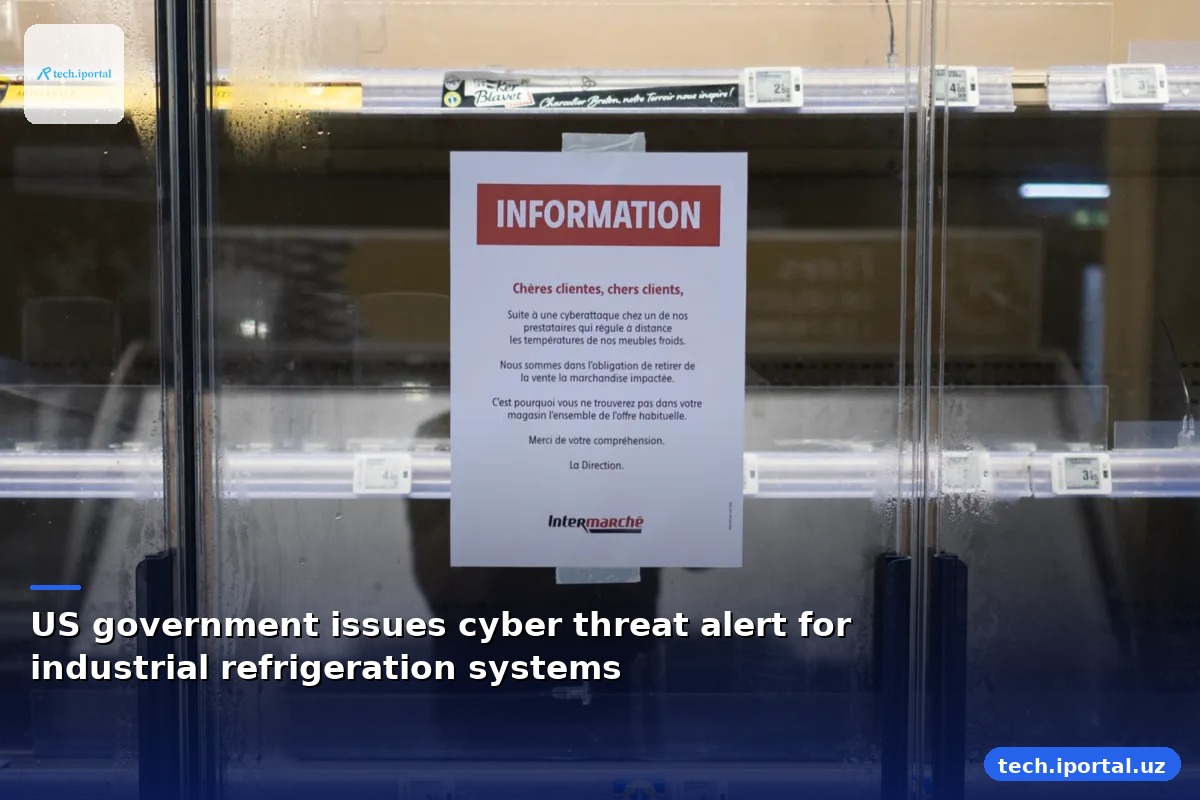
In a coordinated statement released on Thursday, several US federal agencies sounded the alarm about a growing cyber threat to internet‑connected refrigeration and cold‑chain monitoring equipment used in supermarkets, food‑processing plants, military facilities and even blood banks.
Background and scope of the attacks
The warning follows a series of high‑profile intrusions that have been reported across Europe and North America over the past few weeks. Attackers managed to manipulate the temperature settings of freezers and chillers in at least a dozen countries, causing food spoilage, loss of medical supplies and, in some cases, triggering fire‑safety alarms.
According to the Cybersecurity and Infrastructure Security Agency (CISA), the FBI and the Departments of Agriculture, Health and Human Services, and Transportation, the compromised devices belong to critical infrastructure sectors such as food, agriculture, transportation and medicine‑shipping.
While the United States has not publicly attributed the incidents to a specific threat actor, open‑source security analysts have repeatedly linked similar campaigns to Iranian groups, and US officials have expressed a high degree of suspicion toward that nation.
Technical details of the vulnerability chain
Most of the affected refrigeration units are part of the Internet of Things (IoT) ecosystem. They rely on remote‑control interfaces that allow operators to adjust temperature set‑points, monitor power consumption and receive diagnostic alerts over the internet.
Researchers identified two primary attack vectors. First, many devices still run outdated firmware that lacks modern authentication mechanisms. Second, several manufacturers, including the Danish firm Danfoss, stopped providing security patches for older models, leaving them exposed to known exploits.
Once inside the network, threat actors can issue commands that force the compressor to run continuously, raise the internal temperature, or initiate repeated defrost cycles. Such actions not only waste energy but can also create fire hazards, accelerate wear on mechanical components and render perishable goods unusable.
Comparison with previous IoT‑related incidents
The current wave bears resemblance to the 2021 ransomware attacks on HVAC systems in US hospitals, where attackers demanded payment to restore climate control. However, the present campaign differs in its focus on supply‑chain disruption rather than direct financial extortion.
Unlike the 2020 Mirai botnet, which primarily leveraged default passwords to create massive DDoS networks, the refrigeration attacks appear to target specific high‑value assets, suggesting a more strategic motive such as economic sabotage or geopolitical pressure.
In both cases, the common denominator is the lack of a robust security lifecycle for IoT devices – manufacturers ship products with minimal hardening, and end‑users often neglect regular updates.
Limitations, open questions and ongoing investigations
Despite the detailed advisory, several uncertainties remain. The exact number of compromised units is still being tallied, and it is unclear how many organizations have already mitigated the risk by disconnecting devices from the internet.
Security researchers are also probing whether the attackers are using custom malware tailored to specific refrigeration controllers or repurposing publicly available tools.
The Department of Defense has opened a separate investigation into hacks that targeted military freezers, but official findings have not yet been released.
Impact on industry and recommended mitigations
For operators of cold‑storage facilities, the potential consequences are severe: inventory loss can translate into millions of dollars of waste, while temperature excursions in medical supply chains risk compromising life‑saving products such as vaccines and blood components.
The advisory outlines concrete steps: remove remote‑control capabilities from public networks, enforce strong, unique passwords, apply all available firmware patches, and retire equipment that no longer receives vendor support.
In addition, organizations are urged to implement network segmentation, monitor for anomalous temperature changes and conduct regular penetration testing of their IoT assets.
Looking ahead
As more industrial devices become internet‑enabled, the attack surface will continue to expand. The current episode underscores the need for a coordinated approach that involves manufacturers, regulators and end‑users to embed security by design.
Future standards may require mandatory update mechanisms and cryptographic authentication for all IoT refrigeration units, similar to recent mandates for medical devices.
Until such frameworks are widely adopted, vigilance and rapid response remain the most effective defenses against this evolving cyber threat.
For the full briefing, see the original report on TechCrunch.