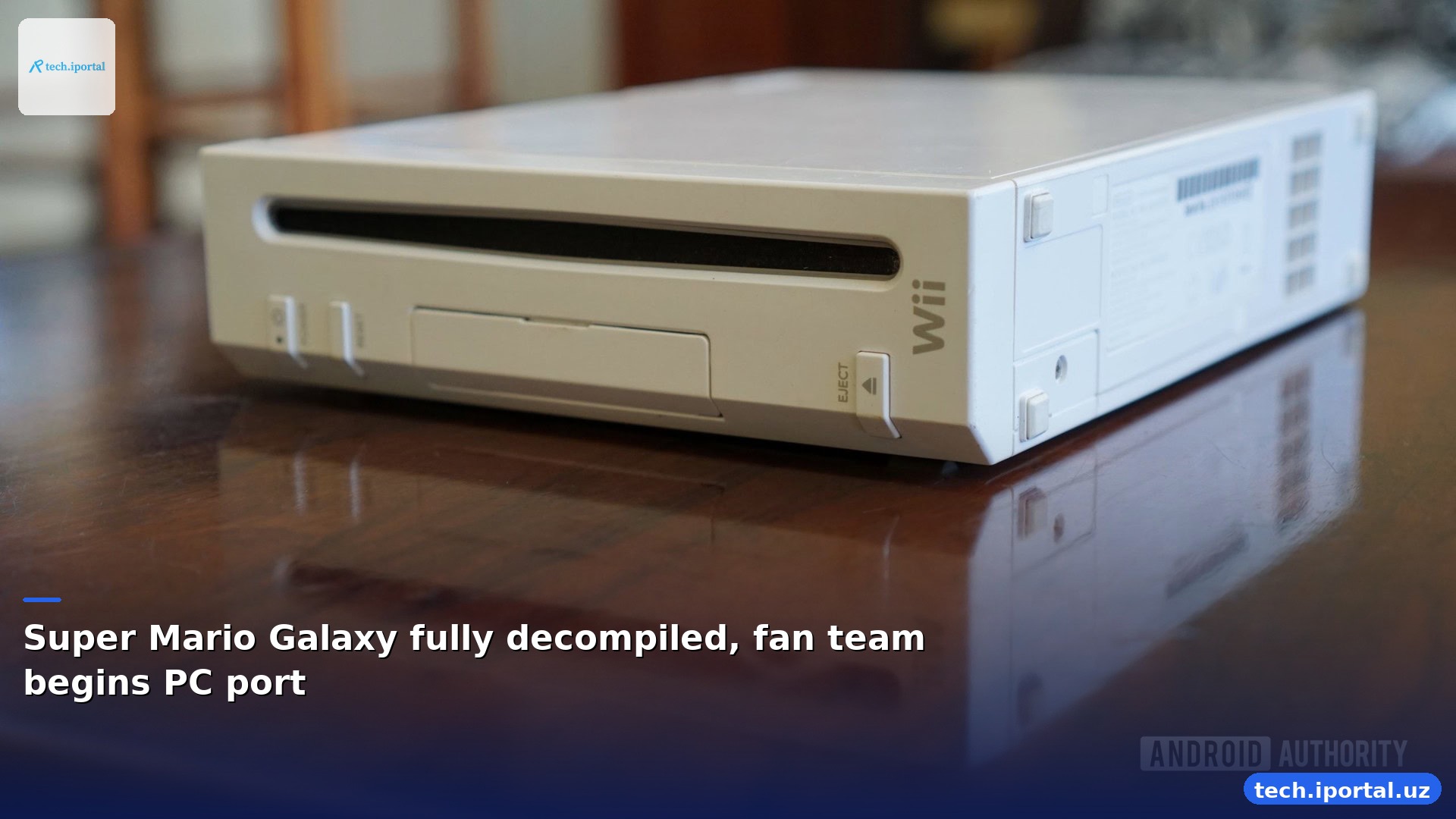
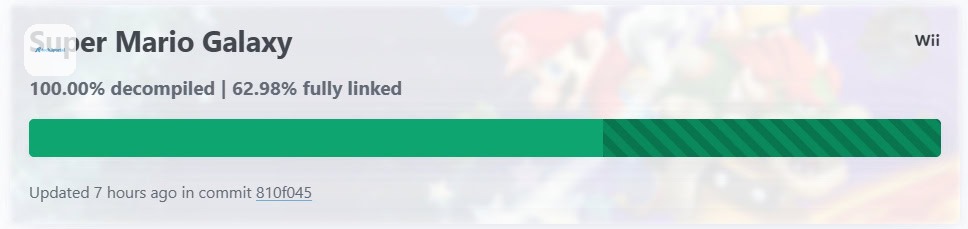
In a milestone that bridges retro gaming and modern software engineering, the Wii title *Super Mario Galaxy* has become the first game from the console to be completely decompiled. The achievement opens the door for an unofficial PC port that is already under development by the fan collective known as Luma's Workshop.
Why decompilation matters for classic games
Decompilation is the process of converting a compiled binary back into high‑level source code. Unlike simple emulation, which runs the original code on a virtualized hardware layer, decompilation produces readable code that can be modified, optimized, and re‑compiled for new platforms. This approach eliminates many of the performance and compatibility issues that plague traditional emulators, especially on devices with different architectures.
From GameCube to Wii: a brief history of fan decompilations
Over the past few years, hobbyist groups have successfully decompiled several GameCube titles, including *Super Smash Bros. Melee* and *The Legend of Zelda: The Wind Waker*. Those projects demonstrated that a community‑driven pipeline—reverse‑engineering, source reconstruction, and clean‑room re‑implementation—can produce stable, native ports for PC and mobile devices. However, the Wii’s more complex hardware and proprietary libraries had kept it out of reach—until now.
Technical breakthrough: the SMGCommunity effort
The SMGCommunity group announced that they have completed a full decompilation of *Super Mario Galaxy*. The project involved several key steps:
- Binary analysis: Using tools such as IDA Pro and Ghidra, the team mapped the Wii executable’s memory layout and identified function boundaries.
- Library recreation: Wii‑specific APIs (e.g., GX graphics, Wii Remote input) were re‑implemented as open‑source stubs that mimic original behavior.
- Data extraction: Textures, models, and level geometry were unpacked from the game’s proprietary archives and converted to standard formats like PNG and OBJ.
- Code reconstruction: Automated scripts generated C‑like pseudocode, which developers refined manually to produce clean, maintainable source files.
The result is a codebase that compiles on modern compilers without requiring any proprietary Nintendo SDKs. The full decompilation is documented on the project’s GitHub repository, and the source is publicly available for anyone to study or build upon.
Fan port in progress: Luma's Workshop’s AstroCore
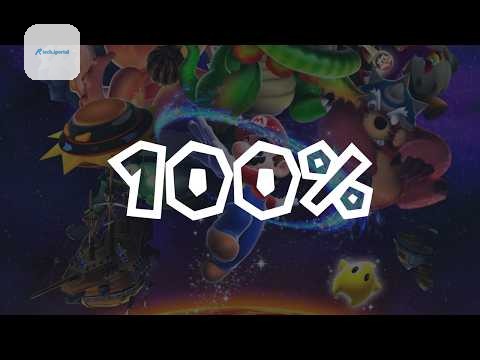
Following the decompilation, Luma's Workshop announced an unofficial PC port codenamed AstroCore. The team emphasized that the port will be "100% coded by humans," deliberately avoiding heavy reliance on generative AI for core gameplay logic. Their rationale is twofold:
- Human‑written code tends to be more maintainable, reducing technical debt that can cripple long‑term community projects.
- Manual implementation allows the team to fine‑tune performance, ensuring frame rates comparable to the original Wii experience on contemporary hardware.
While the project is still early, a prototype build has already demonstrated playable levels, functional physics, and accurate reproduction of the original soundtrack. The team plans to release regular builds for Windows, with potential extensions to Linux and macOS based on community demand.
Comparative look: AI‑assisted ports vs. handcrafted code
Recent years have seen a surge in AI‑assisted game ports, where large language models generate large portions of the codebase. Those approaches can accelerate development but often introduce hidden bugs, inconsistent coding styles, and licensing ambiguities. In contrast, the handcrafted methodology adopted by Luma's Workshop aims for:
- Consistent coding standards that simplify future contributions.
- Clear attribution of original assets, mitigating legal risks.
- Better control over performance optimizations, especially for physics‑intensive sections like the game’s gravity‑defying platforming.
Both models have their place, but the current fan community appears to favor the stability and transparency of human‑written ports for beloved classics.
Potential extensions and community impact
The decompilation of *Super Mario Galaxy* is not an isolated event. Other Wii titles—*Mario Strikers: Charged*, *The Legend of Zelda: Skyward Sword*, *Super Mario Galaxy 2*, *Rock Band 3*, and *Xenoblade Chronicles*—are also undergoing reverse‑engineering. Successful ports of these games could create a broader ecosystem of Wii classics available on modern PCs and mobile devices, preserving them for future generations.
Moreover, the open‑source nature of the decompiled code provides a valuable learning resource for aspiring developers. By studying the reconstruction of complex physics, camera systems, and level streaming, newcomers can gain insight into real‑world game engine architecture.
Open questions and challenges ahead
Despite the progress, several hurdles remain:
- Legal gray area: While the code is reverse‑engineered, Nintendo’s intellectual property rights still apply to assets and trademarks. Fan projects must navigate these constraints carefully.
- Performance parity: Achieving the smooth 60 fps experience of the original Wii on a wide range of PC hardware requires extensive optimization, especially for older GPUs.
- Feature completeness: Certain Wii‑specific features, such as motion‑controlled gameplay using the Wii Remote, need thoughtful re‑implementation for keyboard/mouse or gamepad inputs.
Addressing these issues will likely involve iterative testing, community feedback, and possibly collaboration with other open‑source projects focused on input abstraction.
Conclusion: a new chapter for retro gaming preservation
The full decompilation of *Super Mario Galaxy* marks a turning point for fan‑driven preservation of console classics. By providing a clean, modifiable codebase, the SMGCommunity has paved the way for Luma's Workshop and other groups to deliver high‑quality, native ports that respect the original design while embracing modern hardware capabilities. As more Wii titles follow suit, the line between nostalgic play and contemporary gaming experiences will continue to blur, offering players worldwide a chance to revisit beloved adventures without the need for legacy consoles.
For detailed technical notes and access to the decompiled repository, see the official announcement on Android Authority.