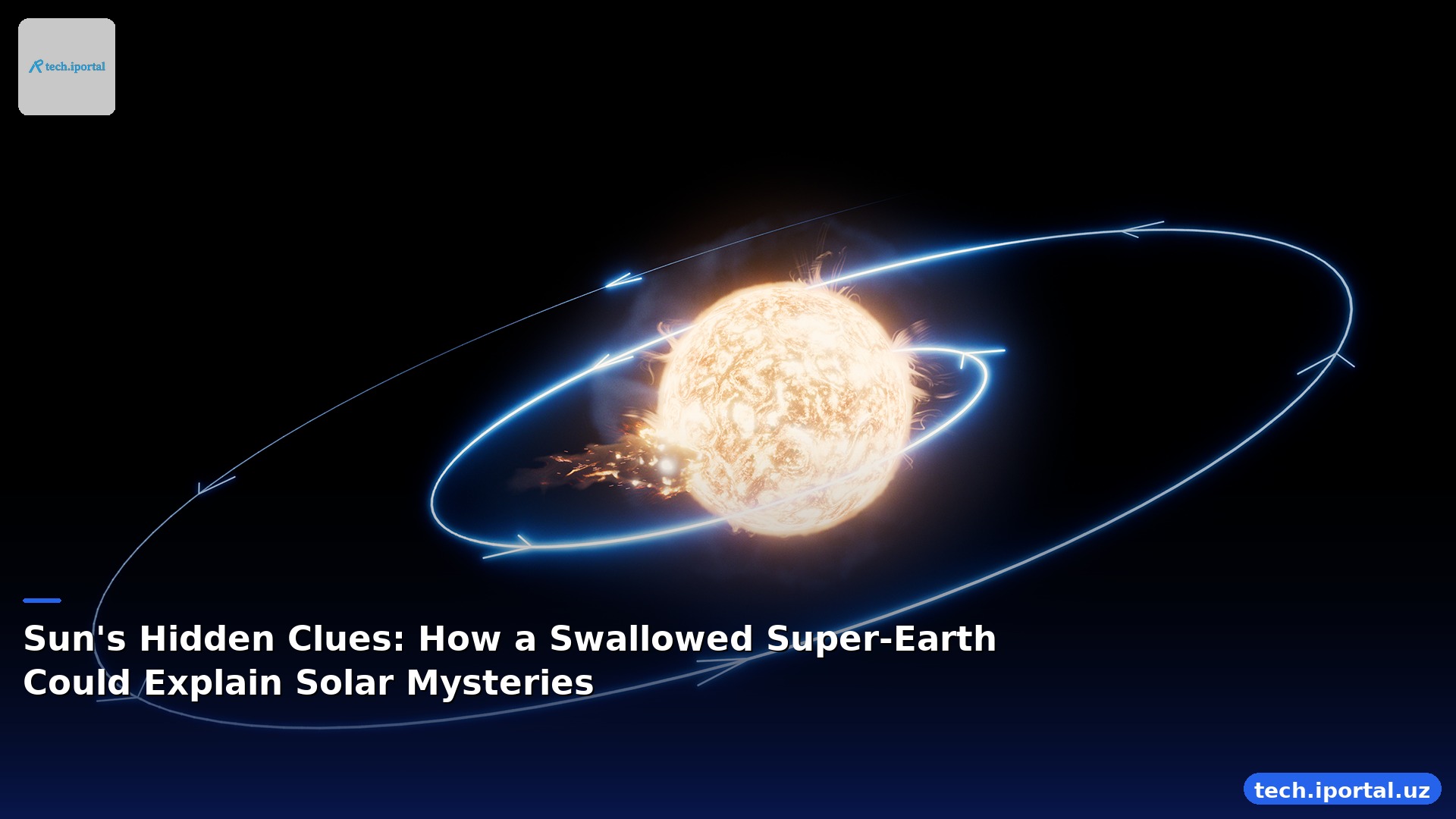
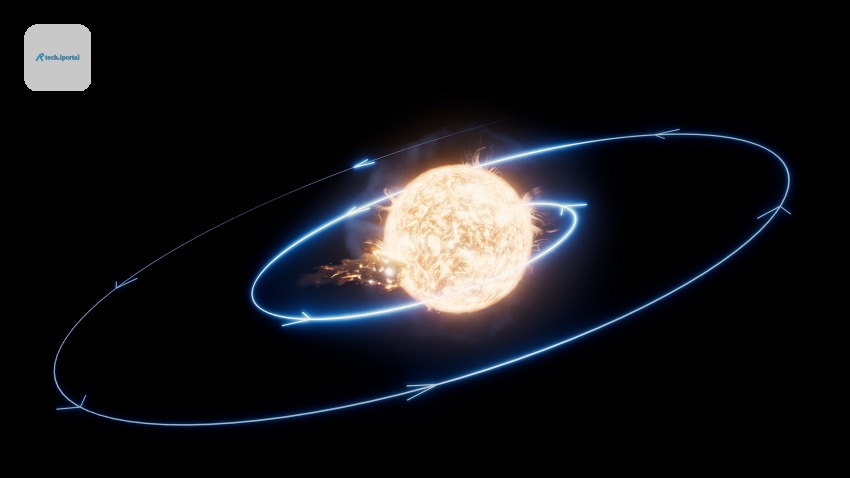
In a breakthrough that bridges stellar physics and planetary science, a team led by Professor Mutlu Yildiz of Ege University proposes that our Sun may have once devoured a super‑Earth‑sized planet. The event, if true, would have left subtle yet detectable chemical signatures deep inside the star, offering a fresh explanation for persistent discrepancies between solar models and helioseismic observations.
Unraveling the Solar Interior
For decades, helioseismologists have mapped the Sun’s internal sound‑speed profile and the depth of its convection zone with remarkable precision. However, standard solar models—built on well‑established physics of stellar evolution—struggle to reproduce these measurements simultaneously. A notable mismatch lies in the sound‑speed structure just below the convection zone, while another puzzle is the Sun’s unusually low surface lithium abundance.
The Planetary Engulfment Hypothesis
Yildiz and colleagues revisited an idea first hinted at a decade ago by Martin & Livio: that a super‑Earth could form inside the orbit of Mercury and migrate inward, eventually spiraling into the young Sun. The new study asks whether the Sun’s interior still bears evidence of such an event. If a planet several times the mass of Earth were accreted, it would deposit heavy elements into the stellar envelope, altering its internal structure and surface composition.
Modeling the Sun’s Past with MESA
The team employed the MESA (Modules for Experiments in Stellar Astrophysics) code to simulate the Sun’s evolution under various accretion scenarios. By varying the mass and timing of the engulfed planet, they generated a suite of models and compared them against helioseismic constraints and observed surface abundances. The simulations revealed that a planet with 5–10 M⊕ falling into the Sun could reconcile the sound‑speed profile, the convection‑zone depth, and the lithium depletion simultaneously.
- Sound‑speed agreement: Models with a super‑Earth accretion match the observed sound‑speed gradient below the convection zone.
- Convection‑zone depth: The predicted depth aligns with helioseismic measurements within 0.5 %.
- Lithium depletion: The accreted material dilutes lithium, reproducing the Sun’s low surface abundance.
Implications for Solar Physics
These findings suggest that early planetary ingestion could be a natural mechanism to fine‑tune stellar models. The study also challenges the assumption that the Sun’s interior is chemically homogeneous, opening the door to a more dynamic view of stellar evolution. If planetary engulfment events are common, they could explain why other stars exhibit similar discrepancies between theory and observation.
Testing the Fingerprints
While the models are compelling, independent confirmation is essential. Future helioseismic campaigns could search for subtle oscillation mode shifts predicted by the accretion scenario. Additionally, spectroscopic measurements of the Sun’s surface composition might reveal trace elements that are over‑ or under‑represented due to the planet’s material. The authors emphasize that a definitive detection would provide strong evidence that the Sun swallowed a planet billions of years ago.
Broader Impact on Exoplanet Studies
The study also informs our understanding of exoplanetary systems. Many stars host close‑in super‑Earths, yet our own system lacks such bodies. If planetary engulfment is a common outcome for inner planets, it could explain the dearth of super‑Earths in the solar system. Moreover, the chemical fingerprints left by engulfed planets could become a new diagnostic tool for probing the early histories of other stars.
For more details, read the full paper: Planetary engulfment as a solution to solar-model discrepancies and its implications for planetary systems published in the Royal Astronomical Society journal.
In summary, the possibility that our Sun once devoured a super‑Earth offers a unifying explanation for long‑standing solar mysteries and provides a novel window into the dynamic interplay between stars and their planetary companions.
Asl manba: ras.ac.uk