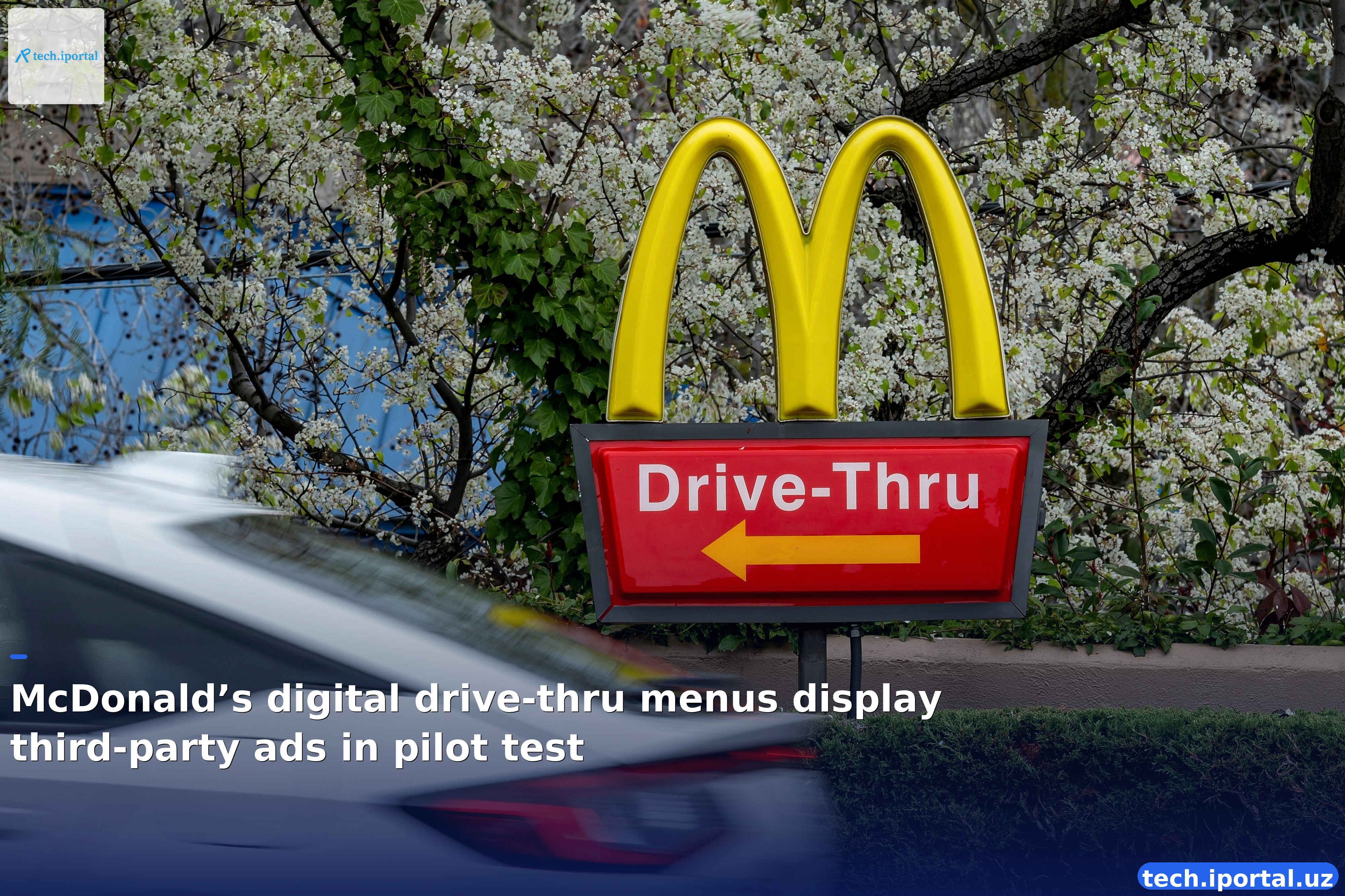
McDonald’s, the world’s largest fast‑food chain, has launched a limited pilot that places third‑party advertisements on its digital drive‑thru menu boards. The experiment, conducted at company‑owned restaurants, shows ads after a customer places an order, turning the waiting period into a brief advertising slot.
Why the experiment matters
Digital menu boards have become a staple of modern fast‑food operations, replacing static paper cards with high‑resolution screens that can be updated in real time. By adding ads, McDonald’s is testing a new monetisation model that leverages existing hardware without altering the core ordering process.

Technical background of digital drive‑thru menus
Most contemporary drive‑thru locations use a networked content‑management system (CMS) that synchronises menu items, pricing, and promotional graphics across multiple screens. The CMS pulls data from the point‑of‑sale (POS) system, allowing the menu to reflect real‑time inventory and dynamic pricing. In the pilot, the CMS is programmed to insert a short video or static ad after the order confirmation screen, before the final receipt is displayed.
- Hardware layer: 55‑inch LED panels with built‑in media players, connected via Ethernet to a central server.
- Software layer: Cloud‑based CMS that schedules ad slots, tracks impressions, and reports performance metrics to advertisers.
- Integration point: The POS triggers an "order complete" event, which the CMS interprets as the cue to play the ad sequence.
Industry precedents and comparative approaches
McDonald’s is not the first quick‑service brand to experiment with on‑screen advertising. In 2022, Starbucks rolled out a similar feature in select U.S. stores, showing coffee‑related promotions on its order‑ahead screens. Taco Bell, meanwhile, partnered with a digital‑out‑of‑home network to display local restaurant ads on its drive‑thru monitors.
Compared with these cases, McDonald’s pilot differs in two key ways:
- It targets the post‑order moment, whereas most competitors display ads before the order is placed.
- The pilot is limited to company‑owned locations, allowing tighter control over data collection and ad relevance.
Potential revenue and data implications
According to a Bloomberg report, the pilot aims to explore "ways to share post‑purchase content that customers may find helpful, relevant, or interesting." If advertisers pay per impression or per completed view, McDonald’s could unlock a new revenue stream that complements its traditional menu‑item promotions.
Beyond direct ad sales, the system can gather anonymised metrics such as:
- Average watch time per ad.
- Click‑through rates for QR‑code‑enabled promotions.
- Correlation between ad exposure and subsequent in‑store purchases.
These data points could inform both McDonald’s own marketing strategies and the broader fast‑food advertising ecosystem.
Challenges and open questions
While the concept is technically straightforward, several practical concerns remain:
- Customer perception: Drivers may view ads as intrusive during a brief waiting period, potentially affecting satisfaction scores.
- Regulatory environment: Some jurisdictions impose restrictions on advertising in food‑service settings, especially for products targeting children.
- Ad relevance: Without sophisticated targeting, generic ads risk being ignored, reducing the value proposition for advertisers.
- Operational complexity: Managing third‑party content alongside menu updates adds a layer of oversight to the CMS workflow.
Future iterations of the pilot will need to address these issues, perhaps by integrating AI‑driven recommendation engines that match ads to the specific items ordered.
Impact on the fast‑food landscape
If the pilot proves profitable, other chains may adopt similar models, turning drive‑thru lanes into micro‑advertising ecosystems. This could accelerate the convergence of retail and digital media, blurring the line between ordering and entertainment.
Moreover, the experiment highlights how legacy hardware—already installed for menu display—can be repurposed for additional revenue without significant capital expenditure. For franchisees, this could mean higher royalty payments, while corporate owners gain a scalable, data‑rich advertising platform.
Conclusion
McDonald’s drive‑thru ad pilot exemplifies a pragmatic use of existing digital infrastructure to explore new monetisation avenues. By placing ads after the order is placed, the company tests a subtle yet potentially lucrative touchpoint. The outcome will likely influence how fast‑food operators think about the post‑purchase moment, balancing revenue goals with customer experience.
For now, the experiment remains limited, and McDonald’s has not commented further. Observers will watch closely as the pilot progresses, noting both the financial results and the consumer response.
Source: Bloomberg, The Verge