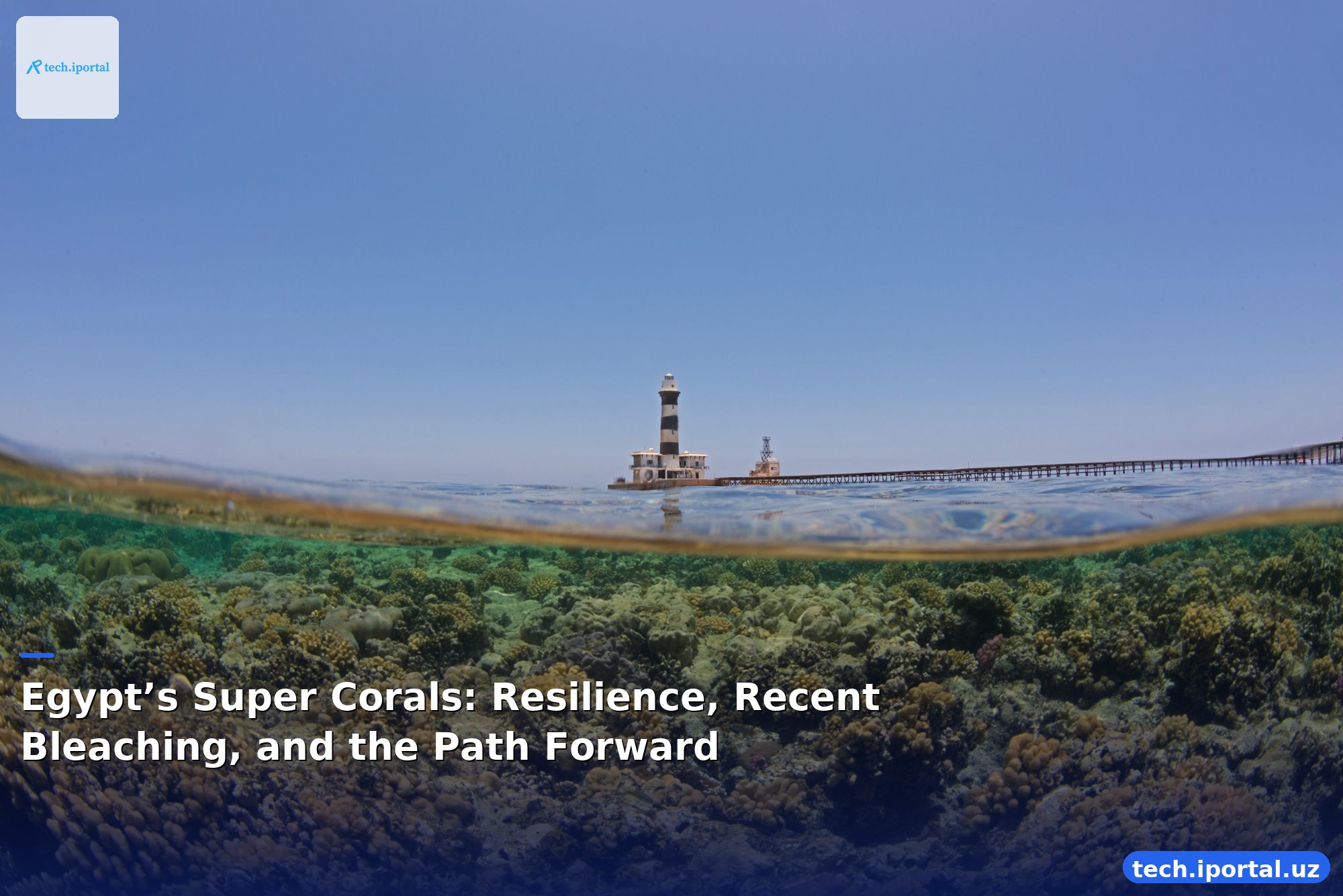
In the warm waters of the Red Sea, a group of corals once celebrated for their extraordinary heat tolerance is now showing signs of distress. Recent bleaching events in 2023 and 2024 have challenged the assumption that these so‑called "super corals" could withstand rising ocean temperatures indefinitely. Understanding the factors that have historically protected these reefs—and why that protection may be weakening—is crucial for predicting their future and guiding conservation strategies.
Why Egyptian Corals Were Considered Super
For decades, marine biologists have noted that the northern Red Sea reefs exhibit a remarkable resistance to bleaching, a phenomenon that has devastated coral systems worldwide. Two main hypotheses have been proposed to explain this resilience:
- Evolutionary filtering: Corals that entered the Red Sea through the Bab al‑Mandab Strait had to survive the extreme heat of the surrounding waters. Only heat‑tolerant species and genotypes survived, and their descendants spread northward into cooler zones.
- Hydrodynamic buffering: The northern Red Sea experiences frequent changes in current direction, creating vertical mixing that brings cooler, deeper water to the surface. This circulation can moderate surface temperatures, providing a natural cooling effect for the reefs.
While both mechanisms likely play a role, recent observations suggest that the hydrodynamic factor may have been the primary shield against heat stress.
2024 Bleaching: A Wake‑Up Call
During the summer of 2024, a prolonged heat wave pushed sea surface temperatures to record highs. A survey conducted by the Hurghada Environmental Protection and Conservation Association (HEPCA) revealed that bleaching occurred across the entire Red Sea, though its severity varied geographically. In the northern reaches, less than 10% of surveyed colonies showed bleaching, whereas in southern areas, the impact reached 50%.
Scientists attribute this disparity to a sudden reduction in water circulation during the heat wave. The sea remained unusually calm for about six weeks, weakening the vertical mixing that normally cools the reef environment. Additionally, exceptionally low tides in July intensified stress on shallow coral communities.
Implications for Marine Biodiversity
Coral reefs, though covering less than 1% of the seafloor, support at least 25% of marine species. Bleaching not only starves the corals themselves but also disrupts the entire ecosystem that depends on them. The Red Sea’s reefs have historically served as a refuge for many species; their decline could ripple through the marine food web, affecting fisheries and coastal economies.
Signs of Recovery and Conservation Efforts
Encouragingly, preliminary data from HEPCA indicate that 75–88% of affected corals have begun to recover within a year, a rate far higher than observed in many other global reef systems. This resilience suggests that, if the protective mechanisms can be maintained, the reefs may bounce back from future heat events.
In response, the Egyptian government has designated new protected areas and partnered with the United Nations Development Programme and the Global Fund for Coral Reefs. These initiatives aim to implement sustainable management practices, monitor reef health, and secure long‑term funding for conservation.
Future Outlook: Climate Change and Circulation Dynamics
While conservation measures can mitigate local stressors, the overarching threat remains global warming. Climate models predict that ocean temperatures will continue to rise, potentially altering the circulation patterns that have historically buffered the Red Sea reefs. If these currents weaken or shift, the reefs could become more vulnerable to bleaching.
Scientists emphasize that reducing atmospheric carbon dioxide and greenhouse gases is the only viable long‑term solution. Local actions—such as protecting reef habitats and regulating coastal development—are essential but insufficient on their own.
In summary, the Red Sea’s super corals have survived past heat waves thanks to a combination of evolutionary adaptation and hydrodynamic protection. Recent bleaching events highlight the fragility of these mechanisms and underscore the urgency of coordinated conservation and global climate action.
For more details, read the original article on WIRED.