Ilm-fan
Kanadaning Alberta provintsiyasida chuchuklar topildi
Alberta provintsiyasida 70 yildan beri chuchuklar bo'lmaganligi haqidagi afsonalar buzildi. Bowden shahrida chuchuk topildi va provintsiyaning "chuchuk patruli" tekshiruv olib bordi.
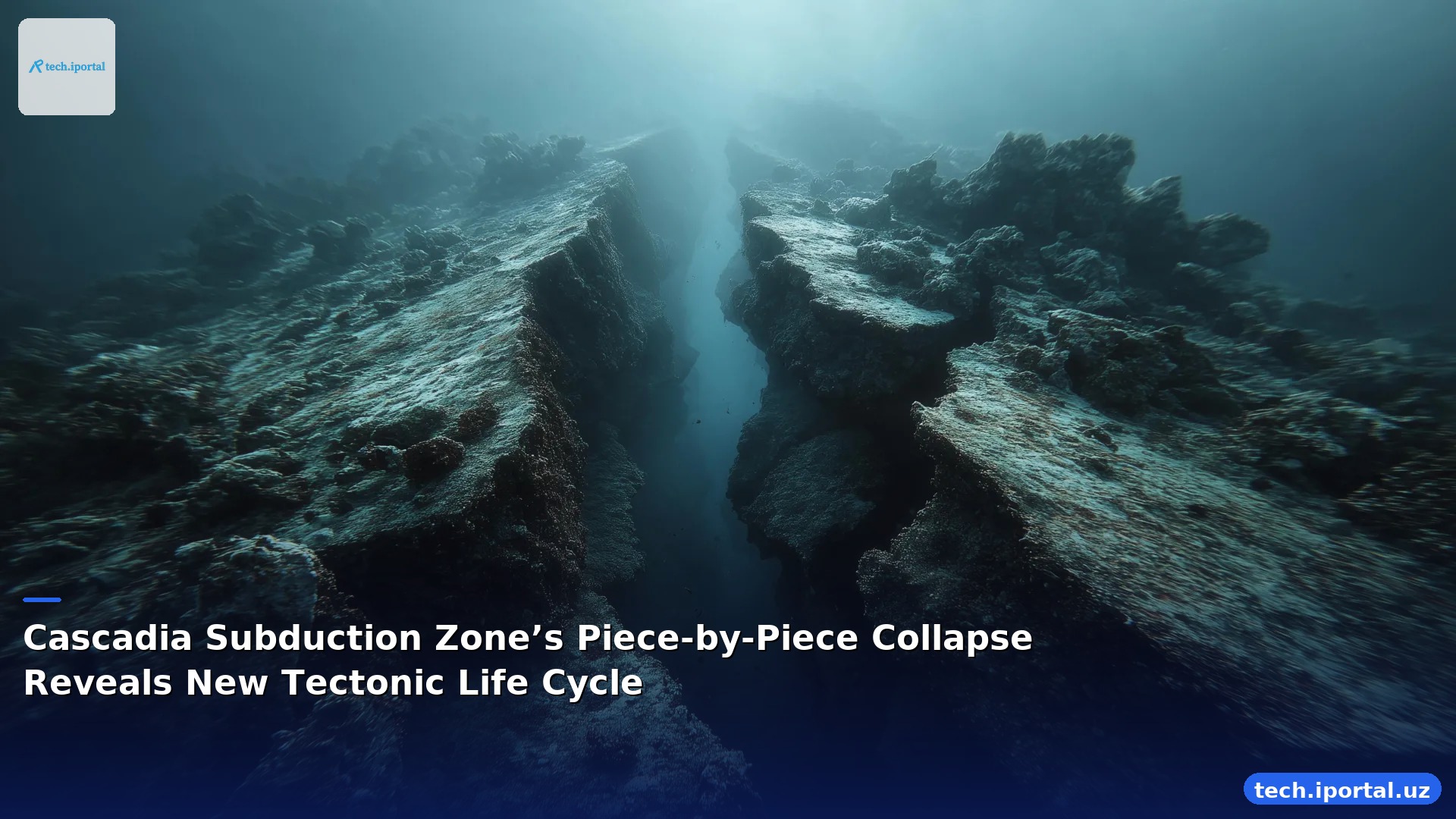
In a breakthrough that reshapes our understanding of Earth’s dynamic crust, scientists have captured a subduction zone off Vancouver Island in the act of disintegrating. The study, published in ScienceDaily, shows that massive tectonic systems may die not in a single catastrophic event but through a series of smaller, episodic breakups. This finding could explain the distribution of ancient plate fragments, the timing of volcanic eruptions, and the hidden fault structures that influence future earthquakes along the Cascadia margin.
Subduction zones form where an oceanic plate is forced beneath another plate and carried deep into the mantle. These regions are responsible for some of the planet’s most powerful earthquakes, large volcanic arcs, and long‑term continental growth. While they can remain active for millions of years, they eventually cease to function. The key question has been: what triggers the end of a mature subduction system?
The research team combined high‑resolution seismic reflection imaging with detailed earthquake catalogs to peer beneath the seafloor. The technique is analogous to medical ultrasound: sound waves are sent into the Earth, and the returning echoes reveal the internal structure. Data came from the 2021 Cascadia Seismic Imaging Experiment (CASIE21), where a 15‑kilometer‑long streamer on a research vessel recorded the reflected waves from the oceanic crust.
By processing these echoes, the scientists produced the clearest ever images of a subduction zone caught in the act of dying. The images reveal extensive faults and fractures cutting through the sinking Juan de Fuca and Explorer plates, with one major tear showing a slab offset of roughly five kilometers.
Traditional models imagined a subduction zone shutting down in a single, dramatic event—akin to a runaway train crashing into a wall. The new data suggest a different scenario: the plate is gradually ripping apart, creating smaller microplates and new boundaries. This process, described as “episodic” or “piecewise” termination, involves individual sections breaking away at different times.
Along a 75‑kilometer tear, some segments continue to generate earthquakes while others have become unusually quiet. This contrast is critical: earthquakes occur when connected rock blocks build up stress and then slip. A section that has fully separated no longer produces seismic activity because the rocks are no longer locked together. The absence of quakes along part of the tear indicates that a segment has already detached and is expanding.
Understanding how subduction zones terminate has direct consequences for hazard modeling. If a zone breaks apart piece by piece, the timing and magnitude of future earthquakes may differ from predictions based on a single catastrophic shutdown. Moreover, the creation of microplates can alter magma pathways, potentially changing the style and frequency of volcanic eruptions along the Cascadia arc.
Geologists can now refine their models of plate tectonics by incorporating episodic termination. This approach may explain the scattered distribution of ancient plate fragments found in the geological record and reconcile discrepancies between volcanic activity timelines and seismic data.
While the current study provides a snapshot of the breakup process, long‑term monitoring is essential to capture the full lifecycle of subduction termination. Future missions could deploy autonomous underwater vehicles equipped with seismic sensors to track the evolution of microplates and transform faults in real time.
Additionally, integrating geodetic measurements—such as GPS and InSAR—could quantify the slow, incremental movements of the remaining slab. Combining these datasets with high‑resolution imaging will offer a comprehensive view of how gravitational forces, mantle dynamics, and crustal stresses interact during the final stages of a subduction zone.
The discovery that subduction zones may die in a series of smaller, episodic breakups challenges long‑standing assumptions about tectonic life cycles. By revealing the detailed mechanics of plate fragmentation, scientists now have a powerful framework to interpret past geological events and predict future seismic and volcanic hazards along the Cascadia margin and beyond.
As research continues, the piece‑by‑piece model will likely become a cornerstone of modern tectonic theory, offering a more nuanced understanding of how Earth’s crust reshapes itself over geological time scales.
Asl manba: sciencedaily.com
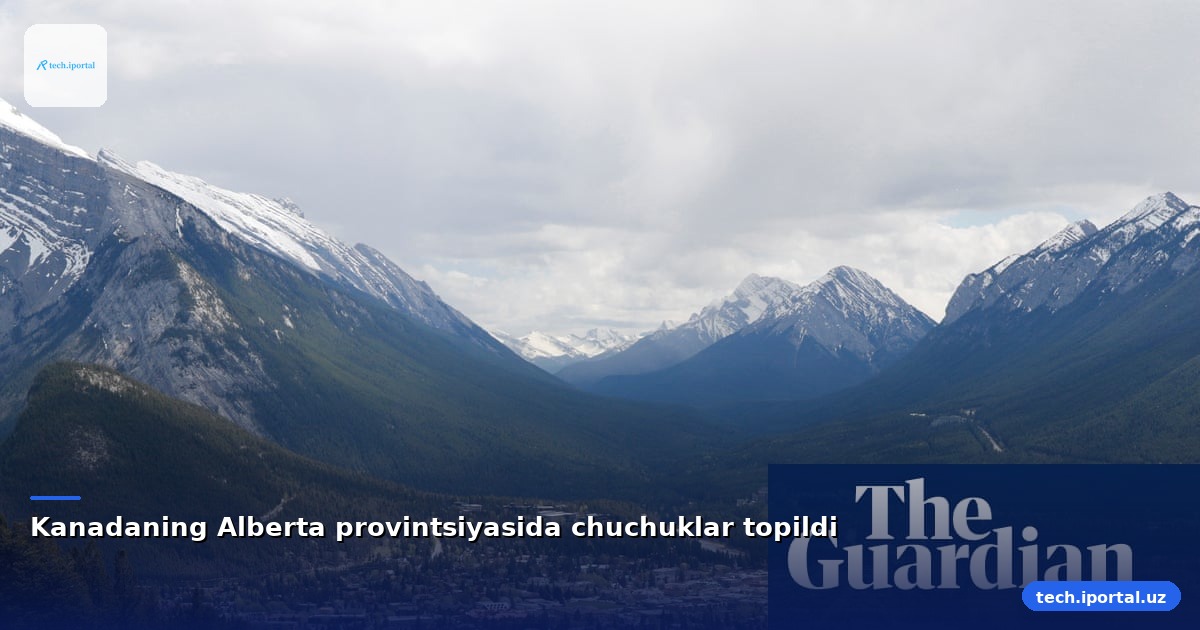
Alberta provintsiyasida 70 yildan beri chuchuklar bo'lmaganligi haqidagi afsonalar buzildi. Bowden shahrida chuchuk topildi va provintsiyaning "chuchuk patruli" tekshiruv olib bordi.

Ultrabinafsha nurlar indeksi quyosh nurlarining teriga ta'siri bilan bog'liq emas. Quyosh nurlarining issiqligi terining o'zgarishiga ta'sir qiladi, lekin ultrabinafsha nurlar indeksi bilan bog'liq emas.
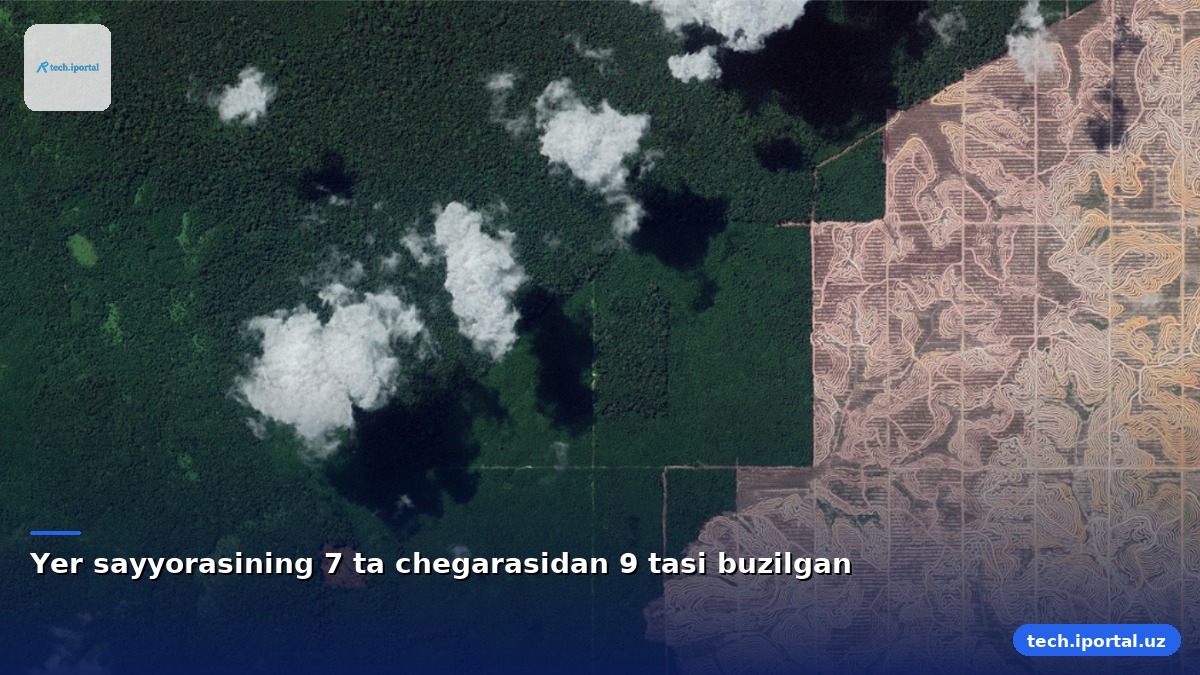
Yer sayyorasining 7 ta asosiy chegarasidan 9 tasi buzilganligi haqidagi yangi hisobot e'lon qilindi. Bu holat Yer sayyorasining tabiiy chidamliligini zaiflashtirib, ekosistemlarning buzilishiga olib kelmoqda.

Amazon Colorado Daryosi uchun suvni saqlash loyihalariga 20 million dollar sarflaydi. Kompaniya 2030-yilgacha suvdan foydalanishni qaytarish maqsadiga ega.