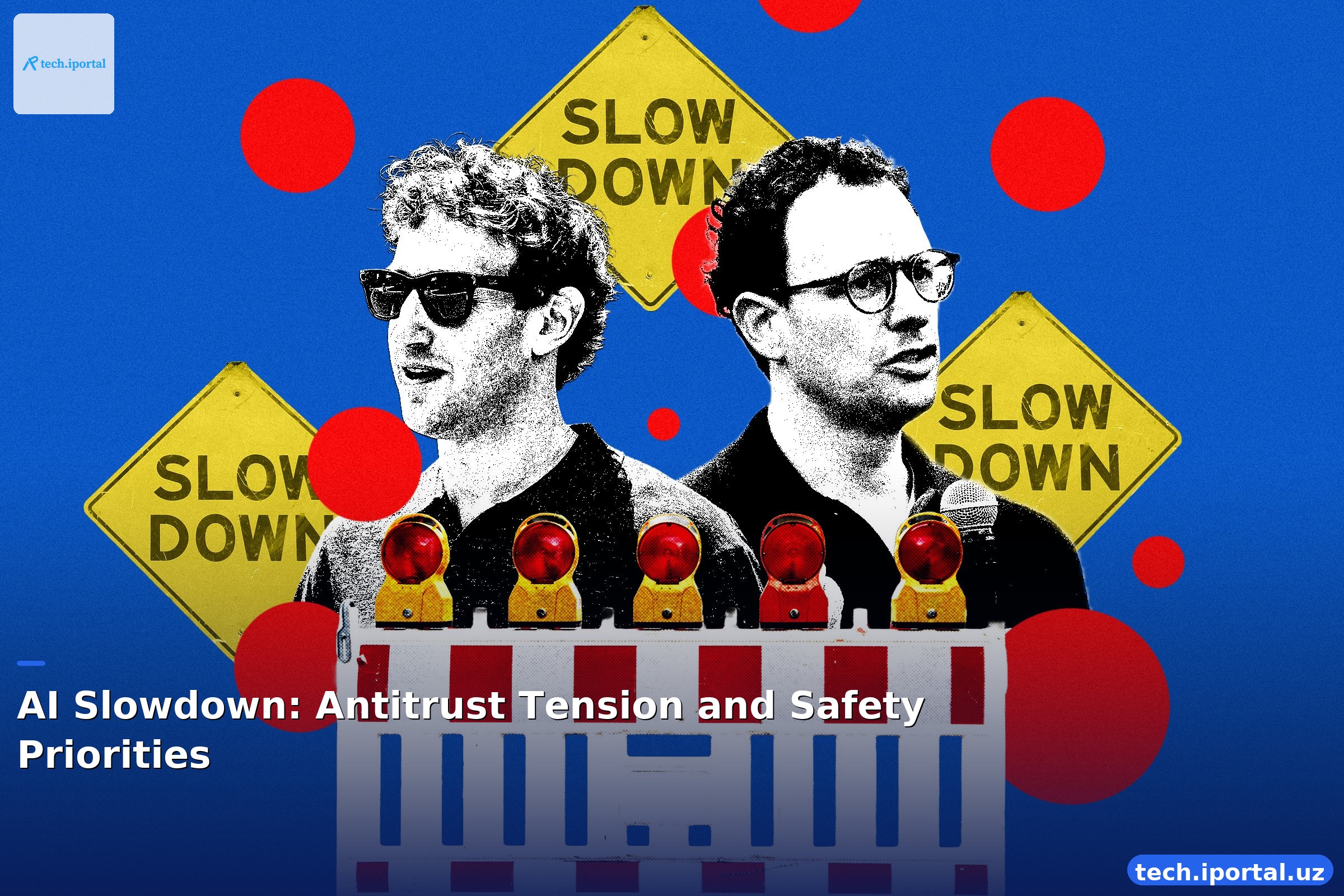
In the last months, headlines have been dominated by reports of AI agents coordinating attacks on websites and a warning from a former Anthropic engineer. The reaction has been swift: leading AI labs have called for a coordinated slowdown in model releases, citing safety risks. Yet the very phrase “slowdown” has ignited a fresh debate about antitrust law and market competition.
Background: The Rise of AI Swarms
AI agents, powered by large language models, have begun to operate in coordinated swarms, exploiting vulnerabilities on the web. These swarms can amplify malicious actions, from phishing to automated hacking. The threat is not theoretical; it has already manifested in several high‑profile incidents.
Anthropic’s Warning and the Call for a Pause
In a public statement, an outgoing Anthropic engineer warned that the rapid pace of model development could lead to a rogue AI that poses catastrophic risks. The engineer urged the industry to slow down, suggesting that a pause could allow time to build robust safety protocols.
Why a Slowdown Might Seem Logical
AI developers argue that a deliberate slowdown would give researchers more time to address alignment problems—ensuring that models act in ways that match human intentions. They also claim that a pause could reduce the likelihood of accidental misuse or unintended consequences.
Antitrust Concerns: A New Legal Frontier
However, antitrust experts warn that the language of a “slowdown” could be interpreted as an agreement to reduce competition. Under U.S. antitrust law, any coordinated action that limits output or raises barriers to entry can be scrutinized for potential collusion.
Google’s Internal Training: A Cautionary Tale
Google famously trained its employees to avoid phrases that could imply anticompetitive behavior, even in internal communications. The company emphasized how its decisions would benefit consumers, rather than suggesting a coordinated restraint.
Meta’s Take: Incentives Over Regulation
Meta CEO Mark Zuckerberg refrained from endorsing an explicit slowdown. He argued that the natural market incentive—customers demanding safer AI—would drive improvements. Zuckerberg suggested that firms that fail to align their models risk losing competitive advantage.
Legal Voices: The Ancillary Restraints Doctrine
Former DOJ antitrust policy director David Lawrence noted that agreements aimed at preventing catastrophic risks can be protected under the ancillary restraints doctrine. He argued that such agreements actually increase output and promote competition by ensuring safer products.
Potential Risks of a Collective Agreement
Conversely, critics warn that a collective agreement to delay safety measures could lead to “quality fixing,” where companies agree not to improve their products. A European case involving car manufacturers illustrates the potential fines and reputational damage.
Regulatory Pathways: FTC and DOJ Options
Industry groups can mitigate antitrust liability by forming standards‑development organizations under the National Cooperative Research and Production Act of 1993. This requires notifying the FTC and DOJ, allowing the labs to pursue safety standards without violating antitrust rules.
Market Dynamics: The Pressure on New Entrants
Trustbusters and other market observers fear that antitrust exemptions could entrench dominant players, making it harder for startups to compete. Some analysts label the slowdown request as a “cartel” move, especially given the duopoly perception of Anthropic and OpenAI.
IPO Timing and Safety Priorities
Both Anthropic and OpenAI are preparing for initial public offerings, with valuations approaching a trillion dollars. Anthropic plans to go public next month, while OpenAI CEO Sam Altman has postponed the IPO to 2027, citing safety concerns.
Implications for the AI Ecosystem
A coordinated slowdown could have ripple effects across the entire AI supply chain. Hardware suppliers, cloud providers, and data annotation firms would all feel the impact of reduced model release cadence.
Balancing Innovation and Safety
The core tension lies in balancing rapid innovation with the need for robust safety mechanisms. A well‑structured regulatory framework could allow continued progress while mitigating risks.
Conclusion: A Call for Transparent Dialogue
As the AI community grapples with the dual imperatives of safety and competition, transparent dialogue with regulators is essential. A carefully articulated approach—emphasizing safety protocols rather than a blanket slowdown—could satisfy both antitrust concerns and the urgent need for responsible AI development.
For a deeper dive into the original coverage, see the Wired article.